



Violets are known as small flowers with a delicate yet distinctive charm. Their characteristic purple hue is often associated with tranquility, loyalty, and elegance. Although they are not as large as roses or lilies, violets possess a unique appeal, particularly in romantic and natural-themed bouquets.
Botanically, the violet generally refers to the genus Viola, which encompasses hundreds of flowering plant species. Many people confuse violets with pansies, even though they belong to the same family but differ in shape and growth characteristics. To fully understand this flower, we need to examine its meaning, varieties, and how to care for it when used in a bouquet.
What Is a Violet Flower?
Violets belong to the genus Viola, part of the Violaceae family. These plants are commonly found in temperate regions such as Europe, North America, and parts of Asia. They are characterized by small petals that are purple, bluish-purple, or sometimes white and yellow, with a soft, subtle fragrance.
In the wild, violets grow close to the ground and are often found in meadows or forest edges. However, today, a wide variety of plants are cultivated as ornamental plants, both for gardens and as cut flowers.
The Meaning of Violets in Various Contexts
The meanings of flowers often stem from history, culture, and symbolism passed down through generations. The violet is not merely a purple flower, but one rich in meaning.
1. Loyalty and Sincerity
Generally, the violet symbolizes loyalty. In some European cultures, this flower is often given as a symbol of sincere and unpretentious love.
2. Humility
Because it grows low to the ground and is unassuming, the violet is also associated with humility. It doesn’t demand attention, yet remains captivating to those who look closely.
3. Spirituality and Serenity
In color psychology, the color purple is often associated with spirituality and self-reflection. It’s no wonder that violets are frequently used in floral arrangements for personal and meaningful occasions.
Popular Types of Violet Flowers
The genus Viola comprises hundreds of species, but some varieties are better known in the world of horticulture and floral arrangements.
1. Viola odorata (Sweet Violet)
Viola odorata is known as the sweet violet because of its soft, sweet fragrance. This flower is often used in classic perfumes and aromatherapy products.
Characteristics:
-
Deep purple or bluish-purple color
-
Natural, fragrant aroma
-
Relatively small flower size
2. Viola tricolor (Wild Pansy)
Viola tricolor is often called the wild pansy or heartsease. Its petals can be a combination of purple, yellow, and white.
This species is more resilient to weather changes and is often grown as a garden plant.
3. African Violet
Although called a violet, Saintpaulia or the African violet is not actually part of the Viola genus. However, due to the similarity in flower color and shape, this plant is often considered a violet.
The African violet is popular as an indoor houseplant because it is easy to care for and blooms profusely for an extended period.
The Difference Between Violets and Pansies
Many people think violets and pansies are the same flower. Scientifically, they do belong to the same genus, but they differ in flower size and color patterns.
-
Pansies generally have larger flowers.
-
Violets tend to be smaller and simpler.
-
Pansies often have contrasting color patterns in the center of the petals.
-
In a bouquet arrangement, pansies stand out visually, while violets add a soft, natural touch.
Violets in Bouquet Arrangements
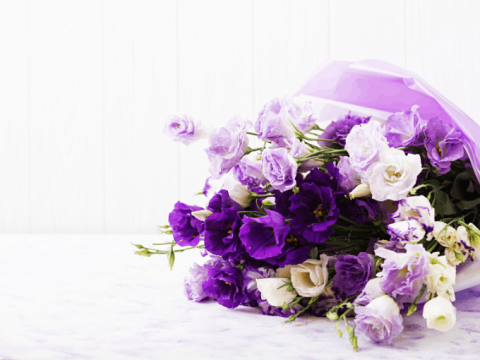
A bouquet featuring violets usually conveys a romantic and elegant vibe. Their purple hue pairs easily with other flowers like white roses, baby’s breath, or hydrangeas.
Some bouquet concepts that work well with violets:
-
Pastel-toned birthday bouquets
-
Rustic-themed wedding bouquets
-
Gift bouquets for personal and intimate moments
Violets are rarely used as the main flower in large bouquets, but they are highly effective as supporting elements that enrich texture and color.
How to Care for a Violet Bouquet
Because they are small and have relatively delicate stems, violets require special care when arranged into a bouquet.
1. Recut the Stems
After receiving the bouquet, cut the bottom of the stems at a diagonal angle, about 1–2 cm. This step helps the flowers absorb water more effectively.
2. Use Clean Water
Fill the vase with clean, room-temperature water. Change the water every 1–2 days to prevent bacterial growth.
3. Avoid Direct Sunlight
Place the bouquet in a cool, shaded spot. Direct sunlight can cause the flowers to wilt faster.
4. Keep Away from Fruit
Ripe fruit produces ethylene gas, which can accelerate the wilting process.
5. Use Flower Food If Available
Some florists provide special nutrients for cut flowers. If available, use them according to the instructions.
With proper care, a bouquet of violets can stay fresh for several days.
When Is the Best Time to Give a Bouquet of Violets?
Violets are perfect for personal occasions, such as:
-
A partner’s birthday
-
Expressions of gratitude
-
Apologies
-
Relationship anniversaries
Because of their associations with loyalty and sincerity, violets are often chosen to express deep yet understated feelings.
Conclusion
Ultimately, violets are not only visually beautiful but also rich in meaning and symbolism. Their soft purple hue represents loyalty, sincerity, and tranquility, making them the perfect choice for meaningful personal moments. Whether arranged as a simple bouquet or combined with other flowers in a more elegant arrangement, violets always add a warm and memorable touch.
If you’d like a professionally arranged and aesthetically pleasing violet bouquet, trust Orchid Florist. With experience in arranging various types of flowers for diverse needs, Orchid Florist is ready to help you select and prepare the best bouquet for your loved ones. Contact Orchid Florist today and create a floral arrangement that’s not only beautiful but also full of meaning.