



The frangipani flower, known internationally as frangipani, is one of the most recognizable tropical ornamental plants due to its distinctive flower shape and delicate aroma. This plant is commonly found in warm climates, including Indonesia, and is often used as a landscaping element, garden plant, and even as part of cultural symbols.
To fully understand the frangipani flower, it is important to view it not only as an ornamental plant, but as a biological entity with botanical identity, symbolic meaning, color variations, and specific care requirements.
Getting to Know Frangipani as an Ornamental Plant
The frangipani flower is a flowering plant that belongs to the tropical flora group. This plant is known for its resistance to hot weather and its ability to grow well in various environmental conditions. In the context of ornamental plants, frangipani is often chosen because it is relatively easy to care for and remains attractive throughout the year.
In many regions, frangipani flowers are also commonly found in city parks, home gardens, and public areas because they provide a natural and aesthetic appeal.
Botanical Identity of Frangipani Flowers
Scientific Name and Classification
Botanically, frangipani flowers belong to the Plumeria genus, which is in the Apocynaceae family. This genus includes various species of flowering plants that generally grow in tropical and subtropical regions.
The name “frangipani” itself is widely used to refer to flowers from the Plumeria genus, especially in an international context.
Physical Characteristics of Frangipani Plants
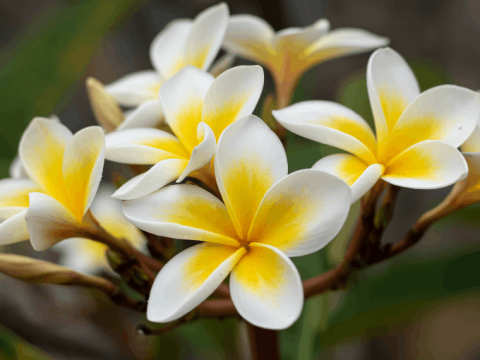
Frangipani flowers have physical characteristics that are quite easy to recognize. The flowers have five symmetrically arranged petals, with the center often being a darker color. The leaves are broad and elongated, while the stems tend to be thick and woody.
In addition to their shape, the scent of frangipani flowers is also an important characteristic that distinguishes them from many other ornamental plants.
Origin and Distribution of Frangipani Flowers
Frangipani flowers originate from Central America and the Caribbean. Over time, this plant spread to other tropical regions, including Southeast Asia and the Pacific Islands.
In Indonesia, frangipani grows very well due to the suitable climate conditions. Its good adaptation to the tropical environment makes frangipani one of the most commonly found plants in various regions.
The Meaning and Significance of Frangipani Flowers in Various Cultures
Frangipani flowers are not only known as ornamental plants, but also have various symbolic meanings in different cultures. These meanings have developed from the relationship between frangipani plants and the social environment, beliefs, and cultural practices in the regions where these plants grow and are used.
The meaning of the frangipani flower is not universal, but contextual, depending on the cultural background and history of the local community.
The Meaning of Frangipani Flowers in Indonesian Culture
In Indonesia, frangipani flowers are often associated with tranquility, simplicity, and respect. These plants are commonly found in places of worship, cemeteries, and open spaces that have certain symbolic values.
This association arises because frangipani flowers are able to survive in relatively dry environments with minimal care, so they are considered to symbolize steadfastness and balance. Their presence in the context of local culture is more related to symbolic function and tradition, rather than purely mystical meaning.
The Meaning of Frangipani Flowers in Southeast Asian Culture
In several Southeast Asian countries, frangipani flowers are used as part of traditional ceremonies and religious activities. These flowers are often considered a symbol of purity and respect, especially when used as offerings.
In this context, frangipani is seen as a plant that represents the relationship between humans and nature, so its use has strong symbolic value in cultural practices.
The Meaning of Frangipani Flowers in Pacific and South Asian Cultures
In the Pacific region, such as on several islands in Oceania, frangipani is known as a symbol of hospitality and tropical natural beauty. These flowers are often used as personal adornments or decorations at social events.
Meanwhile, in some parts of South Asia, frangipani is associated with spiritual values and is used in certain rituals. This meaning has developed from long-standing local traditions.
The Meaning of Frangipani in Western Culture
In Western culture, frangipani is more often seen as a symbol of beauty, relaxation, and tropical atmosphere. This flower is widely used as a decorative element in garden design, aromatherapy products, and the perfume industry.
The meaning that has developed emphasizes aesthetic aspects and sensory experiences, especially the distinctive scent of the flower.
Factors Affecting the Symbolic Meaning of Frangipani Flowers
The meaning of frangipani flowers in a culture is influenced by several main factors, including:
-
The geographical environment where the plant grows
-
Local traditions and beliefs
-
The social and religious functions of the plant
-
How the plant is used in everyday life
These differences in factors cause frangipani flowers to have diverse interpretations of meaning in different parts of the world.
The Colors of Frangipani Flowers and Their Meanings
Frangipani flowers (Plumeria) come in a wide variety of colors. These color differences stem from variations in species, cultivars, and combinations of natural pigments in the petals. In addition to serving as visual distinctions, the colors of frangipani flowers are often given symbolic meanings in various cultural and aesthetic contexts.
The meaning of frangipani flower colors is interpretive and develops based on cultural customs, not as a fixed rule.
White Frangipani Flowers
White frangipani flowers are one of the most commonly found varieties. The color white is often associated with simplicity, tranquility, and purity. In some traditions, white frangipani is used as an element of respect and a symbol of balance.
Visually, white frangipani often has a pale yellow center that provides a soft contrast to the petals.
Yellow Frangipani Flower
Yellow frangipani has a bright appearance and easily attracts attention. The color yellow is often interpreted as a symbol of warmth, energy, and optimism. In the context of garden aesthetics, yellow frangipani is often used to give a lively and open impression.
The yellow color of the frangipani flower comes from natural pigments that develop in certain cultivars.
Red and Pink Frangipani Flowers
Red or pink frangipani flowers tend to be associated with emotional expressions, such as affection and beauty. These colors are often found in hybrid varieties developed through horticulture.
In a decorative context, red and pink frangipani are used as visual elements that provide a strong accent to gardens or landscapes.
Purple Frangipani Flowers and Dark Variations
Some frangipani varieties have purple or dark color gradations. These colors are relatively rarer and are often considered to have high aesthetic value. Symbolically, purple is often associated with uniqueness and exclusivity.
Dark color variations in frangipani usually result from plant breeding for ornamental purposes.
Color Gradations and Combinations in Frangipani Flowers
In addition to single colors, many frangipani flowers display color combinations or gradations, such as white with a yellow center, or pink with orange accents. These combinations create a distinctive visual appeal and are one of the reasons frangipani is popular as an ornamental plant.
Color gradations also help distinguish one cultivar from another.
Factors Affecting the Color of Frangipani Flowers
The color of frangipani flowers is influenced by several factors, including:
-
Plant species and varieties
-
The composition of natural pigments in the petals
-
Environmental conditions, such as light intensity and temperature
-
Plant breeding processes
Differences in these factors cause the color of frangipani flowers to vary even though they come from the same genus.
Common Types of Frangipani Flowers
Some widely known types of frangipani include:
-
Plumeria alba, with white flowers and a delicate fragrance
-
Plumeria rubra, which comes in shades of red, pink, and yellow
-
Plumeria obtusa, with wider leaves and brightly colored flowers
Each type has slightly different characteristics in terms of shape, color, and growth pattern.
Ideal Growing Environment for Frangipani Flowers
Frangipani flowers grow optimally in environments with sufficient sunlight exposure. These plants prefer well-drained soil that is not too moist.
Frangipani is known to be drought-resistant, making it suitable for planting in areas with moderate to low rainfall.
How to Care for Frangipani Bouquets to Keep Them Fresh
Frangipani bouquets have a distinctive aroma and relatively thick petals, but they are sensitive to heat and excessive moisture. Therefore, caring for frangipani bouquets requires special handling to maintain their appearance, freshness, and aroma after delivery.
Caring for bouquets is different from caring for live frangipani plants. The main focus is on managing the environment, humidity, and physical handling of cut flowers.
Proper Placement of Frangipani Flower Bouquets
Frangipani flower bouquets should be placed in areas with good air circulation and stable room temperature. Avoid placing bouquets:
-
In direct sunlight
-
Near heat sources such as spotlights or electronic equipment
-
In damp or enclosed areas without ventilation
Excessive heat exposure can accelerate petal wilting and reduce the natural fragrance of frangipani flowers.
Water Management for Frangipani Flower Bouquets
If the frangipani flower bouquet uses a vase with water, ensure that:
-
The water in the vase is clean and changed daily
-
The flower stems are recut at an angle by approximately 1–2 cm before being placed in water
-
No leaves are submerged in water to prevent decay
For frangipani bouquets without vases (dry arrangements or hand bouquets), the flowers should be kept dry and not sprayed with water directly, as excessive moisture can cause the petals to turn black.
Ideal Humidity for Frangipani Bouquets
Frangipani bouquets do not require water spraying like other tropical flowers. Excessively high room humidity can actually accelerate the wilting process.
If the room feels very dry, simply place a container of water around the bouquet (without touching the flowers) to maintain natural humidity.
Handling Bouquets When Moving or Using Them
Frangipani petals are quite strong, but they are still vulnerable to pressure and friction. When moving bouquets:
-
Hold the stems, not the flower heads.
-
Avoid stacking bouquets with other objects.
-
Do not re-tie bouquets too tightly.
Proper handling helps keep bouquets neat and aesthetically pleasing.
Durability of Frangipani Bouquets
In general, frangipani bouquets have a durability of:
-
1–2 days for hand bouquets without water
-
Up to 3 days if using a vase of water and stored properly
Factors that affect durability include the freshness of the flowers when arranged, room temperature, and how the bouquet is cared for after delivery.
Avoiding Exposure to Substances that Accelerate Wilting
Frangipani bouquets should be kept away from:
-
Cigarette smoke
-
Perfumes or room fresheners with high alcohol content
-
Ripe fruits (such as bananas or apples) that produce ethylene gas
These substances can accelerate the aging process of flowers and cause the petals to fall off faster.
Bouquet Care for Special Occasions
For use in events such as weddings or traditional ceremonies:
-
Store the bouquet in a cool room before use.
-
Take the bouquet out closer to the time of the event.
-
Avoid direct exposure to air conditioning.
These steps will help keep the bouquet fresh throughout the event.
Find Beautiful Flower Arrangements Only at Orchid Florist
Orchid Florist provides a variety of beautiful flower arrangements that you can easily obtain. You can get bouquets with various types of flowers, ranging from roses, lilies, tulips, sunflowers, asters, baby's breath, and so on.
In addition, we also have a collection of flowers suitable for various occasions, such as graduations, anniversaries, and condolences. Consult your needs immediately by contacting Orchid Florist. Our team is ready to help you find the flowers that suit your needs.